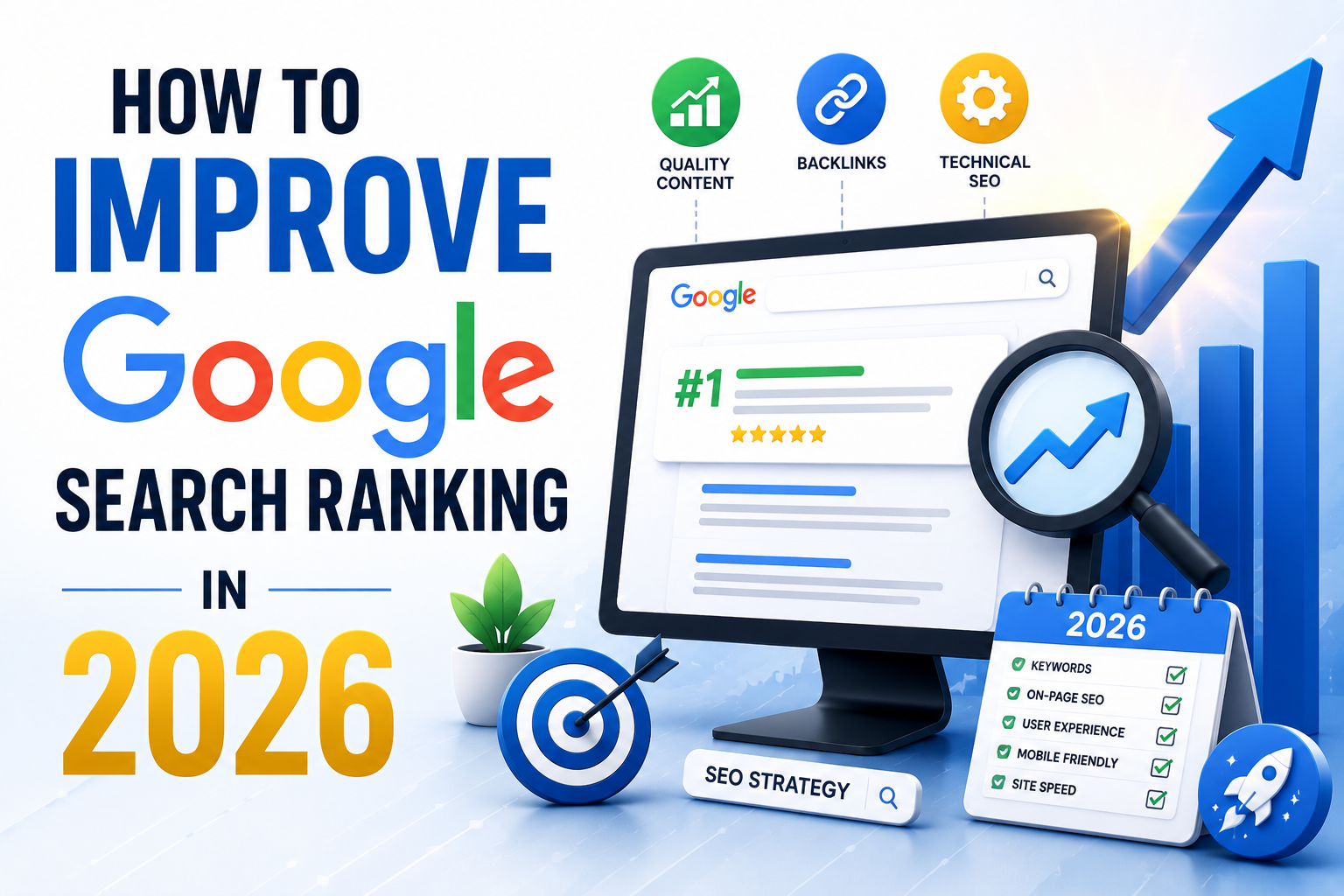
Let's be real for a second. Ranking on Google in 2026 isn't what it used to be. The old tricks, keyword stuffing, buying random backlinks, spinning content, none of that works anymore. If anything, it actively hurts you now.
And yet, every day I still see people asking the same question: "Why isn't my website ranking?" Usually, the answer isn't some big secret. It's a bunch of small things done consistently over time. Google has just gotten smarter, users have gotten pickier, and the bar for what counts as "good enough" keeps going up.
So if you're wondering how to actually improve your Google search ranking this year, without wasting months on outdated advice, this is the guide I wish I had when I first started. No fluff. No jargon dumps. Just the stuff that genuinely works right now.
Grab a coffee. Let's get into it.
What Google Actually Cares About in 2026
Before we jump into tactics, let's clear something up. Google's algorithm isn't really one thing. It's a whole system of signals working together. But if you strip it all down, it comes back to three big questions Google keeps asking about your site:
- Is your content genuinely helpful?
- Can real people trust it?
- Does your website actually work well (speed, mobile, security)?
Everything I'm about to share fits into one of those three buckets. If you keep them in the back of your mind, SEO stops feeling so mysterious.
1. Write Content That Answers Real Questions
The single biggest change in SEO over the last few years? Google is way better at understanding intent. It's not just matching keywords anymore. It's trying to figure out what you actually want.
So if your content just repeats a keyword 30 times without actually answering anything, you're done. It won't rank. And even if it somehow does, nobody's staying on the page.
Instead, before you write anything, ask yourself:
- What is the person searching this really trying to figure out?
- What would frustrate them if my page didn't answer it?
- What's the shortest, clearest path to giving them that answer?
Write like you're helping a friend, not padding a word count. Google can tell the difference now. Honestly, so can readers.
2. Get Serious About E-E-A-T
E-E-A-T stands for Experience, Expertise, Authoritativeness, and Trust. And yes, it sounds like corporate SEO jargon, but it's genuinely important, especially in 2026.
Google wants to know: does the person writing this actually know what they're talking about? Have they done it, lived it, tested it?
Some easy ways to boost your E-E-A-T:
- Add real author bios with credentials and a photo
- Link to your author's social profiles or portfolio
- Cite trustworthy sources
- Share personal experience where it fits
- Keep your "About" and "Contact" pages actually useful
Anonymous, faceless websites have a much harder time ranking now. If Google can't tell who's behind your content, it's less likely to trust it.
3. Nail Your On-Page SEO Basics
This is the boring part everyone loves to skip, and it's usually why sites don't rank. On-page SEO isn't glamorous, but it's absolutely essential.
The non-negotiables:
- A clear, compelling title tag (include your main keyword naturally)
- A meta description that actually makes people want to click
- One H1 per page
- Logical H2s and H3s that break up your content
- Descriptive URLs (no random numbers and letters)
- Internal links to related pages on your site
- Optimized images with alt text
If you get these right on every page, you're already ahead of half the internet.
4. Speed Up Your Website (Seriously)
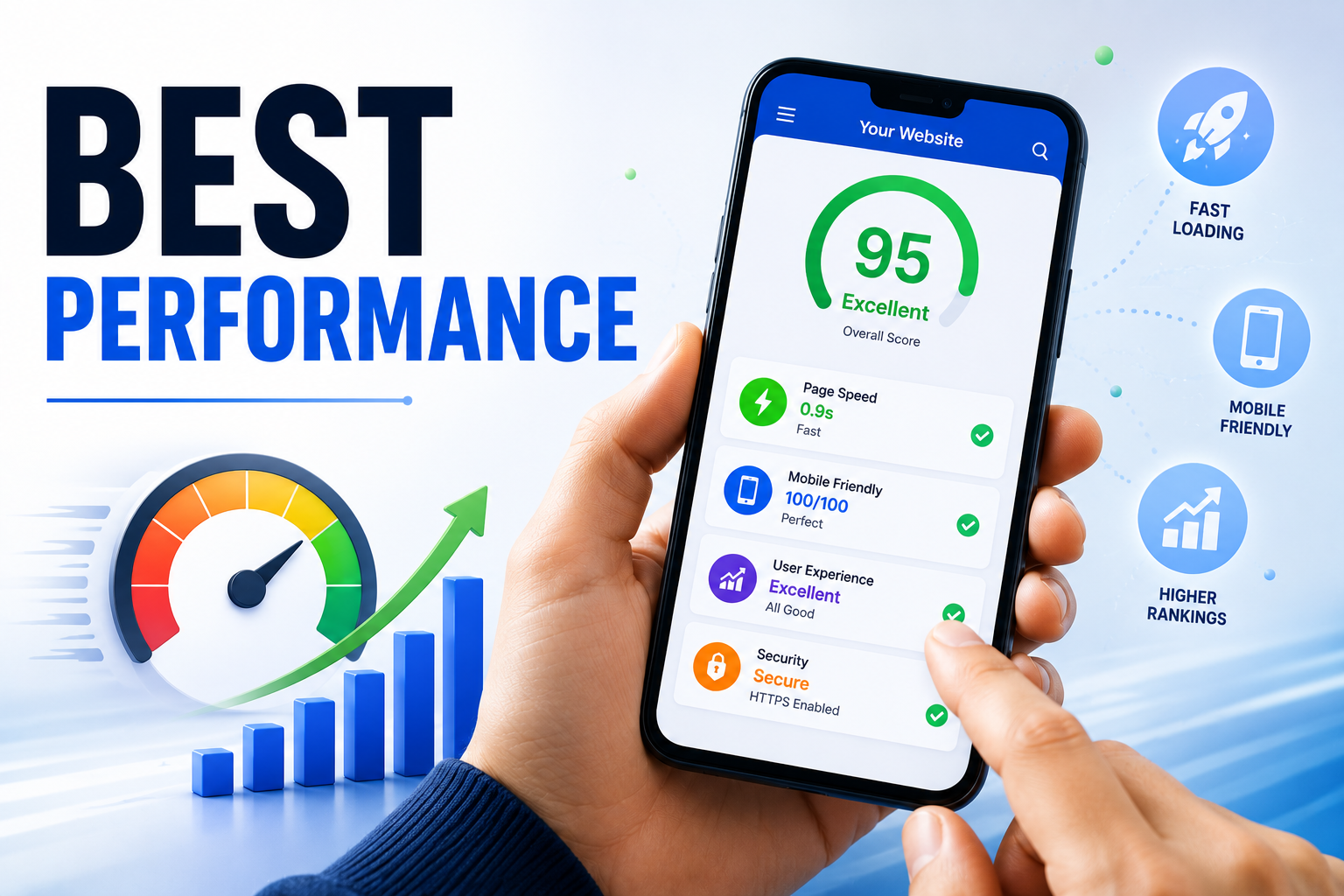
If your site takes more than three seconds to load, half your visitors are gone before they even see your content. Google knows this. It measures it. And it ranks fast sites higher.
Focus on:
- Compressing your images and converting them to WebP
- Using a reliable hosting provider (cheap hosting almost always shows)
- Adding caching and a CDN
- Removing unused plugins and heavy scripts
- Improving your Core Web Vitals scores
Speed isn't just a ranking factor. It's a user experience factor. And in 2026, those two are basically the same thing.
5. Build a Strong Internal Linking Structure
Internal linking is like giving Google a map of your website. When you connect related pages properly, you tell Google, "Hey, these two things belong together."
Every time you publish a new post, ask yourself:
- Which older articles are related to this one?
- Where can I link back to my important pages naturally?
- What anchor text describes the linked page clearly?
Don't overdo it. Two to five relevant internal links per article is usually plenty. But do it consistently. Over time, this alone can move the needle more than you'd expect.
6. Earn High-Quality Backlinks (Don't Buy Them)
Backlinks still matter. Maybe not as much as they used to, but they're absolutely a ranking signal. The key word, though, is quality. One link from a real, respected site in your niche beats a hundred spammy ones every time.
Ways to earn good backlinks:
- Write genuinely useful content that other people want to reference
- Do original research or share unique data
- Guest post on real websites (not link farms)
- Get listed in reputable industry directories
- Build real relationships with people in your niche
Buying backlinks in 2026 is honestly one of the fastest ways to get penalized. Just don't.
7. Optimize for Mobile First
More than 60% of Google searches happen on mobile. And Google indexes the mobile version of your site first, not the desktop one.
Test your site the way real people use it:
- Open it on your phone
- Try tapping every button
- Check for text that's hard to read
- Make sure pop-ups don't cover the screen
- See how fast it actually loads on 4G
If it feels annoying to you, it feels annoying to Google. Fix it.
8. Refresh and Improve Your Old Content
This is one of the most underused SEO tactics, and it's honestly one of my favorites. You don't always need to write more. Sometimes, updating what you already have is way more effective.
Go find your older articles that used to rank and are now slipping. Then:
- Update outdated stats and examples
- Add new sections that answer newer questions
- Improve the intro to hook readers faster
- Refresh images and screenshots
- Add better internal and external links
Google loves fresh, well-maintained content. A single update can send a stale post back to page one.
9. Focus on User Experience (Not Just SEO)
Here's a mindset shift that changed everything for me: stop obsessing over Google. Start obsessing over your visitors.
The sites that rank best in 2026 are the ones that feel good to actually use. Clean design. Easy navigation. Fast pages. Content that respects your time. No sketchy pop-ups. No twelve auto-playing ads.
Google measures user behavior signals like bounce rate, time on page, and how often people come back. If your visitors love your site, Google will notice.
10. Track, Measure, and Keep Improving
SEO isn't something you do once and forget. It's an ongoing process. The people winning in search results are the ones checking in, testing, and improving month after month.
Tools worth using regularly:
- Google Search Console – free and essential
- Google Analytics 4 – for understanding your visitors
- PageSpeed Insights – for performance checks
- Ahrefs, Semrush, or Ubersuggest – for keyword and backlink data
Look at what's working, do more of that. Look at what's not, fix it or drop it. It's really that simple, but very few people actually do it consistently.
Final Thoughts
Improving your Google search ranking in 2026 isn't about tricks or shortcuts. It's about doing the right things, consistently, for long enough that they start compounding. Better content. Faster website. Real trust. Real value.
Here's my honest advice: don't try to fix everything in one weekend. Pick two or three things from this list, work on them properly, and then move to the next. That's how real rankings are built. Slowly, and then all at once.
If you focus on being genuinely helpful, easy to trust, and technically solid, Google will reward you. It might take a few months. But it will happen. And when it does, that traffic keeps coming, month after month, without you having to pay for every click.
That's what makes SEO one of the smartest long-term bets you can make for your business.
🎥 Watch Related Tutorial
Frequently Asked Questions
1. How long does it take to improve Google search rankings?
Usually somewhere between three and six months for noticeable results, though very competitive keywords can take longer. Consistency matters more than speed.
2. What is the fastest way to rank on Google?
There's no true "fast" way. But targeting long-tail, low-competition keywords with genuinely helpful content is your best shot at ranking faster.
3. Do backlinks still matter in 2026?
Yes, especially high-quality ones from trusted websites. But their weight has evolved. Content quality and user experience matter just as much now.
4. Is keyword research still important?
Absolutely. Just do it around user intent, not just search volume. Understanding why someone searches matters more than the exact words they use.
5. Can I rank on Google without paying for SEO?
Yes, especially if you're willing to invest your time. Free tools, solid content, and consistent effort can take you a long way.
6. How often should I publish new content?
Quality beats quantity every time. One well-researched post per week is better than five rushed ones. Consistency is what matters.
7. What role does AI content play in SEO now?
AI is fine for research, outlines, and support. But content that ranks in 2026 needs a real human voice, personal experience, and unique value. Pure AI content struggles to compete.
8. Does website design affect Google rankings?
Yes, indirectly. Poor design leads to slower load times, higher bounce rates, and worse user experience, all of which affect rankings.
9. Should I focus on Google or other search engines?
Google still handles the vast majority of global searches, so it makes sense to start there. But optimizing for Google usually helps you rank on Bing and others too.
10. What's the biggest SEO mistake in 2026?
Trying to game the system instead of serving your audience. Google's smarter than ever. If you focus on real users, your rankings tend to follow.